
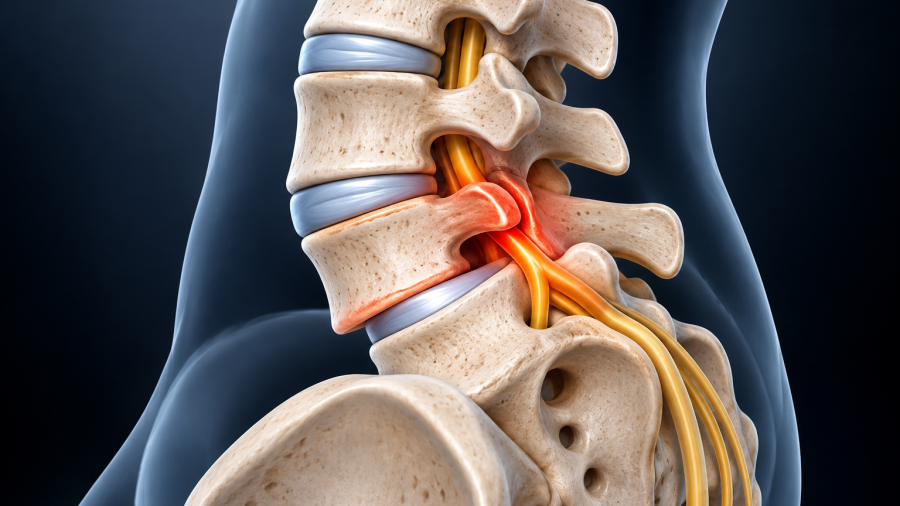
When searching for non-surgical spondylolisthesis treatment, many patients with lumbar spondylolisthesis are told that the vertebral slippage cannot be changed without surgery. New research, however, is examining whether certain patients may experience measurable spondylolisthesis reduction through a structured, non-surgical corrective-care approach.
A study published in the European Spine Journal evaluated patients with lumbar anterolisthesis who underwent Chiropractic BioPhysics® (CBP®) corrective care. The researchers reported measurable improvements in vertebral displacement as well as patient-reported outcomes.
The findings provide interesting new evidence regarding the potential role of non-surgical spondylolisthesis treatment for appropriately selected patients.
What Is Lumbar Spondylolisthesis?
Spondylolisthesis occurs when one vertebra shifts relative to the vertebra below it. When the vertebra moves forward, the condition is also called anterolisthesis.
Lumbar spondylolisthesis can vary considerably in severity. Some people have little or no discomfort, while others may experience symptoms such as:
- Low back pain
- Stiffness
- Pain with standing or walking
- Muscle tightness or weakness
- Pain traveling into the buttocks or legs
- Numbness or tingling
- Reduced ability to exercise or perform normal activities
Because the condition involves an actual change in vertebral position, evaluating the biomechanics and alignment of the lumbar spine may be important when determining appropriate treatment.
What Does the New Spondylolisthesis Research Show?
The rThe recently published study evaluated 117 patients with lumbar anterolisthesis who underwent a multimodal rehabilitation program incorporating Chiropractic BioPhysics corrective care.
Researchers evaluated changes in the amount of vertebral displacement as well as patient-reported physical and mental quality-of-life measures.
Following treatment, the researchers reported measurable reductions in anterolisthesis, along with improvements in patient-reported outcomes.
These findings are noteworthy because they suggest that, in some appropriately selected patients, non-surgical spondylolisthesis treatment may be associated with measurable changes in vertebral positioning rather than symptom improvement alone.
However, this does not mean that every spondylolisthesis can be reduced or that conservative treatment is appropriate for every patient.
Can Spondylolisthesis Be Treated Without Surgery?
Treatment depends heavily on the individual patient.
Many cases of lumbar spondylolisthesis are initially managed conservatively, particularly when there is no progressive neurological deficit or other indication requiring surgical evaluation.
Traditional conservative treatment may focus on pain management, activity modification, strengthening, rehabilitation, or chiropractic care.
CBP corrective care takes a more biomechanical approach by using objective measurements of posture and spinal alignment to develop an individualized treatment plan.
Depending on the patient’s findings, care may incorporate:
- Chiropractic adjustments or manipulation
- Mirror Image® corrective exercises
- Spinal remodeling traction
- Postural rehabilitation
- Neuromuscular re-education
- Individualized home exercises
The goal is not simply to make the patient temporarily feel better. When appropriate, treatment is designed to address abnormal spinal mechanics that may be contributing to the patient’s condition.
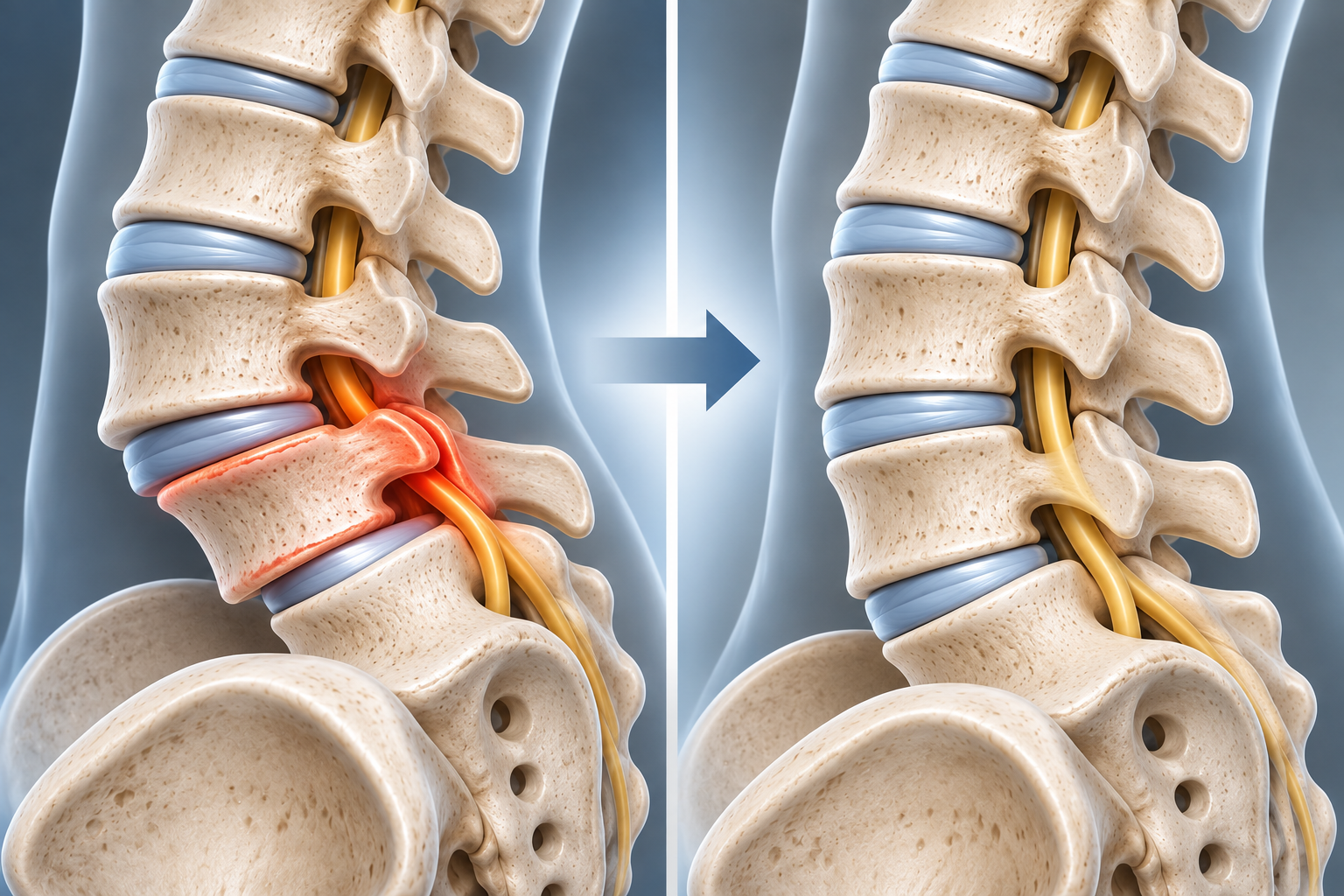
However, this does not mean every spondylolisthesis can be corrected using conservative treatment. The type and grade of spondylolisthesis, neurological findings, spinal stability, symptoms, bone health, and other individual factors all matter when determining appropriate treatment.
Why Is Spondylolisthesis Reduction Important?
With lumbar spondylolisthesis, the position of one vertebra relative to another has changed.
That displacement can alter how mechanical forces are distributed through the lumbar spine, including the discs, facet joints, muscles, ligaments, and surrounding neurological structures.
For this reason, spondylolisthesis reduction is an interesting area of research.
Even when complete correction is neither possible nor necessary, reducing abnormal displacement and improving spinal biomechanics may potentially influence how forces are distributed through the affected region.
What Is Chiropractic BioPhysics (CBP) Corrective Care?
Chiropractic BioPhysics, commonly called CBP, is a chiropractic technique that emphasizes objective measurement and correction of abnormal posture and spinal alignment.
Unlike traditional chiropractic care, which primarily focuses on pain relief, joint mobility, and temporary symptom management, Chiropractic BioPhysics (CBP) is an advanced, evidence-based technique dedicated to normalizing spinal alignment and posture.
CBP integrates principles from physics, biology, and neurology to analyze how abnormal posture and spinal misalignments—such as the vertebral displacement seen in lumbar spondylolisthesis—distribute abnormal mechanical stress throughout the body. The approach relies on rigorous mathematical models of the ideal human spine to establish specific, quantifiable correction goals for every patient rather than using a one-size-fits-all adjustment protocol. By utilizing a combination of targeted Mirror Image® postural exercises, spinal remodeling traction, and specific adjustments, CBP aims to structurally rehabilitate the spine back toward its normal mechanical configuration, helping reduce chronic tissue strain and supporting long-term spinal health.
For patients with lumbar spondylolisthesis, this means evaluating more than simply where the patient hurts.
The position of the vertebrae, overall lumbar alignment, posture, neurological findings, symptoms, spinal stability and other clinical factors should all be considered before determining whether corrective treatment is appropriate.
Spondylolisthesis Treatment at Strong Spine & Body
At Strong Spine & Body, we use digital biomechanical X-rays, detailed examinations and Chiropractic BioPhysics principles to evaluate spinal alignment and biomechanics.
For patients with spondylolisthesis, a thorough clinical assessment goes beyond standard X-rays. In our office, we frequently utilize specialized stress X-ray films—imaging taken while the spine is under specific postural loads—to evaluate how the vertebrae respond and whether the displacement is structurally flexible. This critical diagnostic step helps us understand the biomechanics of the slip, determine if mechanical correction is a realistic option, and decide whether a customized non-surgical spondylolisthesis treatment program is appropriate for your spine.
Our approach to non-surgical spondylolisthesis treatment is not based on promising that every vertebral slip can be corrected. Instead, our goal is to identify biomechanical abnormalities that may be contributing to the patient’s condition and determine whether corrective care is an appropriate option.
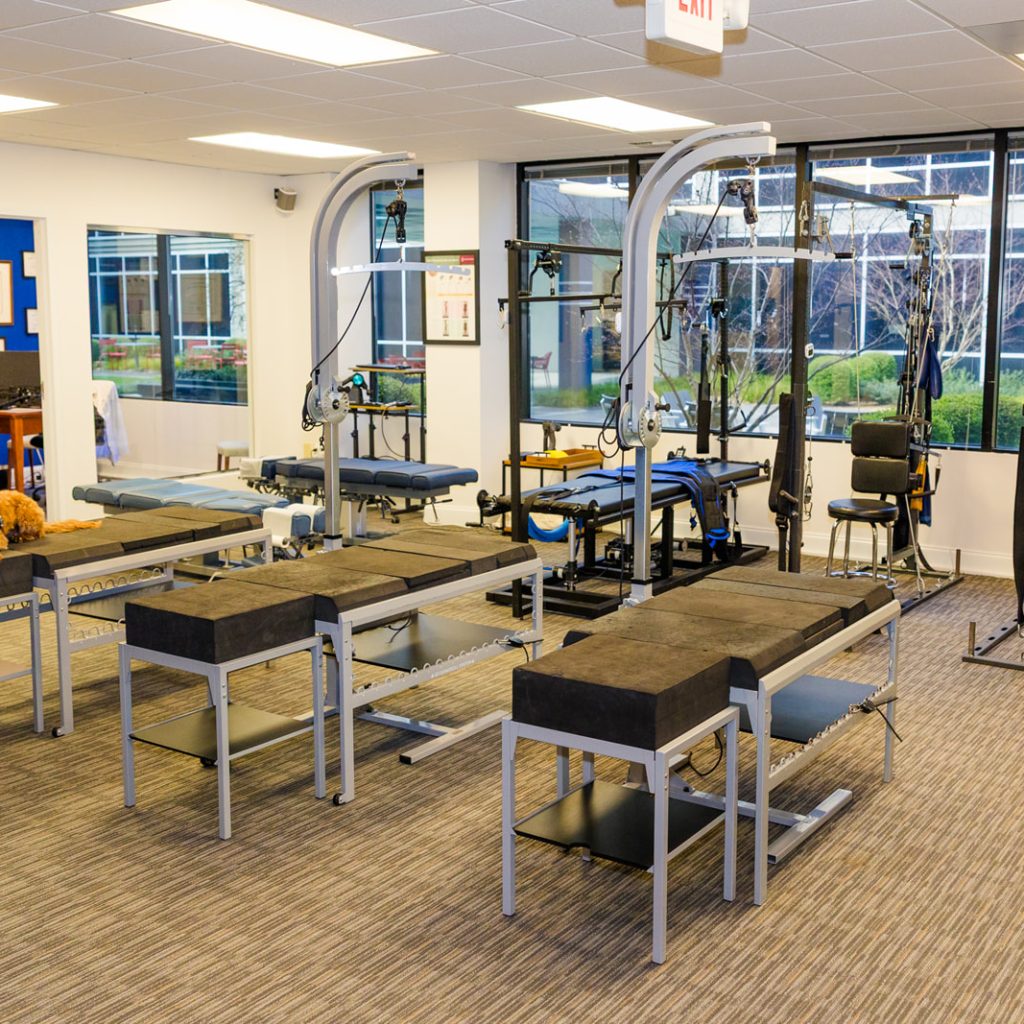
Looking for Non-Surgical Spondylolisthesis Treatment in Sandy Springs?
If you are living with lumbar spondylolisthesis and want to explore whether conservative mechanical care can help your specific alignment, a comprehensive evaluation is the best place to start. By utilizing advanced digital posture and spinal imaging—including stress films—we can thoroughly analyze your structural mechanics and provide an honest, clear assessment of what kind of correction is realistically achievable.
Strong Spine & Body serves patients in Sandy Springs, Dunwoody, Roswell, Marietta, and the greater North Atlanta area.
Research Source
This article discusses research published in the European Spine Journal and synthesized on CBP Non-Profit:
Fedorchuk CA, Lightstone DF, Fedorchuk CG, Fernandez CJ, DeGeorge SM, Harrison DE. Improvement in physical and mental quality of life following reduction of lumbar spondylolisthesis using Chiropractic BioPhysics® corrective spinal rehabilitation: a case series of 117 patients with lumbar anterolisthesis(es). European Spine Journal. Published February 2, 2026.
Add a Comment