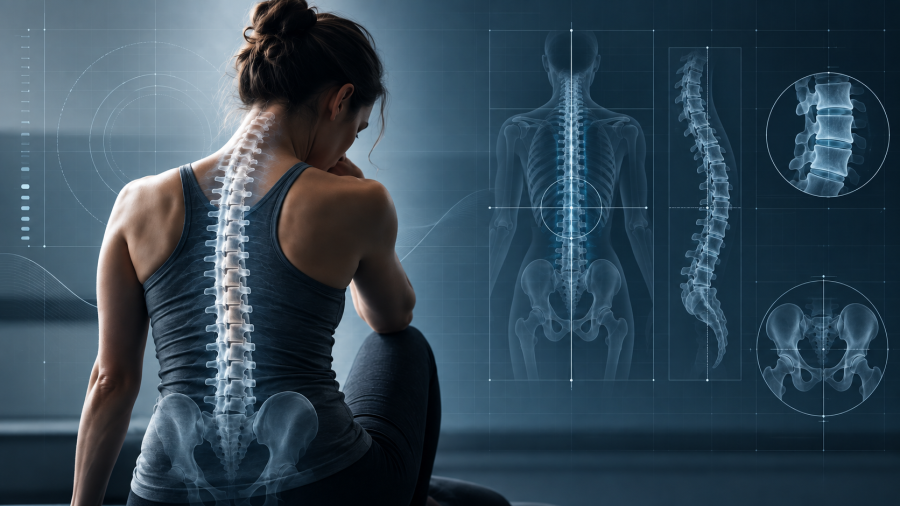
3D spinal alignment and postural analysis in a patient with fibromyalgia

Fibromyalgia and Spinal Alignment: New Research Finds a Strong Connection

Fibromyalgia is a complex chronic pain condition commonly associated with widespread pain, fatigue, sleep disturbances, increased pain sensitivity, and difficulty performing everyday activities.

Because fibromyalgia involves changes in how the nervous system processes pain, researchers have long looked for measurable factors that may help explain why symptoms vary so dramatically from one person to another.

A 2025 study published in Scientific Reports examined an interesting possibility: Could the three-dimensional alignment of the spine help predict the severity of fibromyalgia symptoms?

The results showed a surprisingly strong relationship between several postural measurements and outcomes including pain sensitivity, sleep quality, pain-related thinking, and overall fibromyalgia impact.

Researchers evaluated 303 patients diagnosed with fibromyalgia syndrome according to established American College of Rheumatology criteria.

Rather than relying only on a traditional posture examination, the researchers used a validated 3D surface-imaging system to measure several aspects of spinal and pelvic alignment.

The measurements included:

  • Sagittal imbalance — how far the body shifts forward or backward
  • Coronal imbalance — side-to-side displacement
  • Vertebral rotation
  • Pelvic obliquity — whether one side of the pelvis sits higher than the other
  • Pelvic torsion
  • Pelvic rotation

The researchers then used several machine-learning models to determine whether those measurements could predict clinical outcomes including pain sensitivity, sleep quality, the Fibromyalgia Impact Questionnaire, and the Pain Catastrophizing Scale.

The best-performing machine-learning models demonstrated very high predictive values.

For example, spinal and postural measurements produced an R² of 0.97 for sleep-quality scores, 0.95 for algometric pain sensitivity, 0.94 for pain catastrophizing, and 0.88 for overall fibromyalgia impact. 

In simple terms, the researchers found that differences in three-dimensional spinal and pelvic alignment were strongly associated with differences in fibromyalgia symptom severity within this group of patients.

Two measurements appeared particularly important: sagittal imbalance and pelvic obliquity.

Vertebral rotation also demonstrated an interesting nonlinear relationship with symptoms. When rotation exceeded approximately 10 degrees, its contribution to predicted pain severity increased substantially, particularly when combined with greater sagittal imbalance.

Fibromyalgia is not simply a muscle or joint disorder. It is associated with central sensitization, in which the nervous system becomes increasingly sensitive to sensory and painful input.

That makes the relationship between biomechanics and the nervous system particularly interesting.

Abnormal spinal alignment can change the way gravity and mechanical forces are distributed through the spine, muscles, joints, and surrounding tissues. Researchers are investigating whether persistent abnormal mechanical input may contribute to the overall sensory burden experienced by some patients with chronic pain conditions.

The current study does not prove that poor posture causes fibromyalgia.

However, it does suggest that spinal biomechanics may be one meaningful piece of a much larger puzzle.

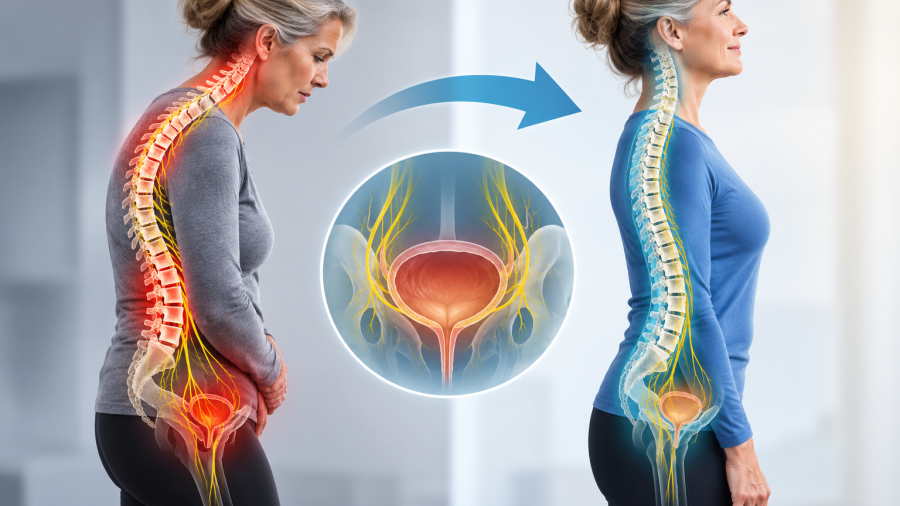
Fibromyalgia symptoms, spinal alignment, chronic pain, and nervous system illustration

This distinction is important.

The study was observational and cross-sectional. Researchers measured patients at a particular point in time and identified relationships between their spinal alignment and clinical symptoms.

That means the study can demonstrate an association, but it cannot establish that spinal misalignment caused fibromyalgia or that correcting alignment will cure the condition.

Fibromyalgia remains a complex disorder influenced by neurological, biological, psychological, sleep, activity, and other factors.

What this research does provide is additional evidence that objective spinal biomechanics may deserve consideration when evaluating patients with fibromyalgia, particularly when significant postural abnormalities are present. 

One of the most interesting aspects of this research is that the investigators did not simply categorize posture as “good” or “bad.”

They measured specific three-dimensional deviations and used those values to examine how structural differences related to clinical symptoms.

That philosophy is similar to how we approach spinal biomechanics at Strong Spine & Body.

Rather than evaluating posture exclusively by appearance or treating only the location where someone hurts, we look for measurable abnormalities in spinal alignment and function.

At Strong Spine & Body in Sandy Springs, we use comprehensive examinations, postural analysis, and digital biomechanical radiography to evaluate spinal alignment.

For patients who demonstrate significant structural abnormalities, our Chiropractic BioPhysics® approach may incorporate individualized chiropractic adjustments, Mirror Image® corrective exercises, corrective spinal traction, neuromuscular re-education, and objective reassessment of progress.

The goal is not to claim that spinal correction treats or cures fibromyalgia.

Instead, we want to identify whether a patient has measurable biomechanical abnormalities that may be contributing to their overall mechanical stress and functional limitations, and determine whether those findings are appropriate to address as part of a broader healthcare strategy.

You can learn more about our Chiropractic BioPhysics® approach here.

This study adds an interesting new dimension to the discussion surrounding fibromyalgia.

For years, patients with fibromyalgia have often experienced significant symptoms despite relatively few objective findings on conventional examinations.

Advanced biomechanical measurements and machine-learning analysis may help researchers identify patterns that traditional methods have overlooked.

More research—particularly prospective studies and clinical trials—is needed to determine whether improving specific spinal alignment abnormalities actually produces meaningful improvements in fibromyalgia outcomes.

For now, the findings provide another reason to consider posture and spinal biomechanics as part of a comprehensive evaluation rather than looking only at the location of pain.

The study discussed in this article was published in Scientific Reports in July 2025:

Moustafa IM, Khowailed IA, Mohammad Zadeh SA, et al. Advanced machine learning applications in fibromyalgia to assess the relationship between 3D spinal alignment with clinical outcomes. Scientific Reports. 2025;15:22804.

Read the full study on PubMed

You can also read the patient-focused summary from CBP NonProfit. Read the CBP NonProfit research summary

Important: This article is provided for educational purposes. The research demonstrates associations between 3D spinal alignment measurements and fibromyalgia-related clinical outcomes. Individual evaluation and treatment recommendations vary.
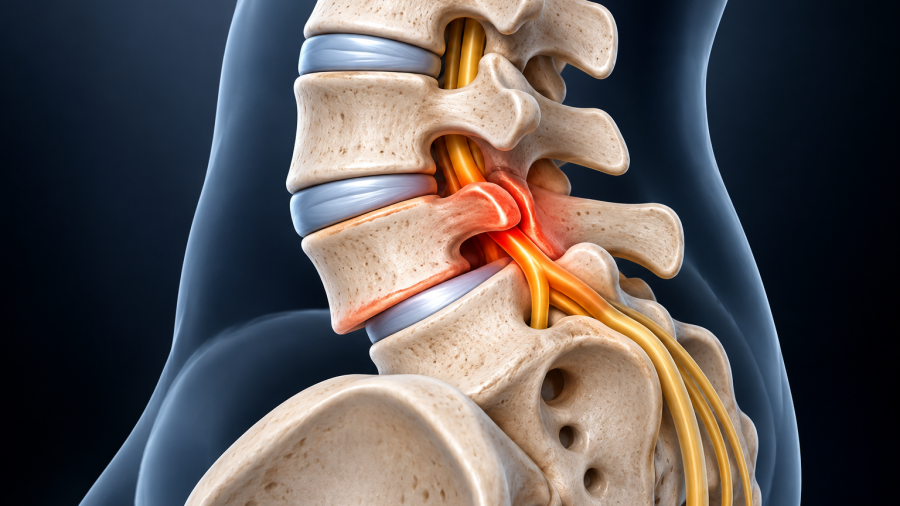
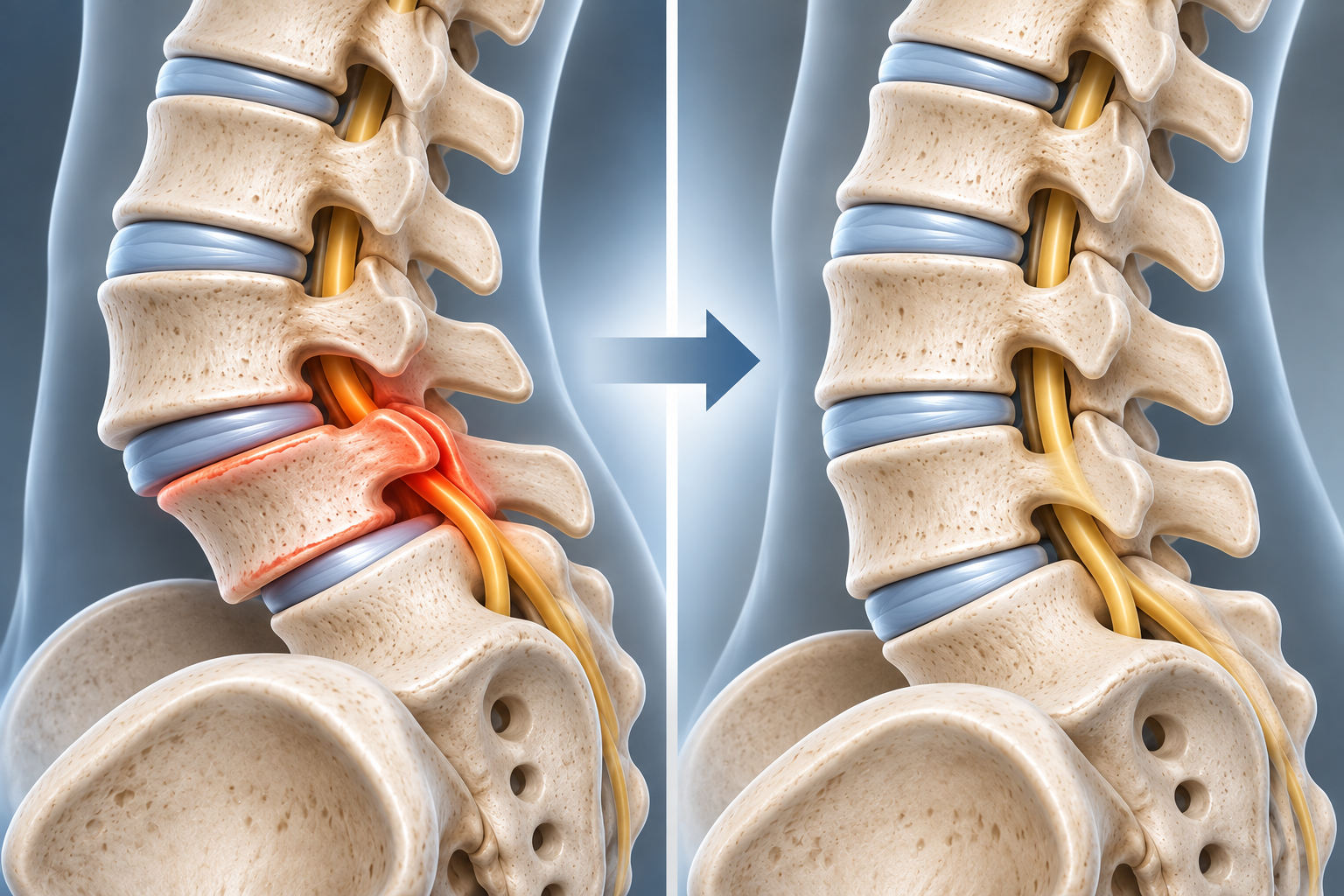
Lumbar spondylolisthesis showing forward vertebral displacement

Non-Surgical Spondylolisthesis Treatment: New Research Shows Measurable Reduction

When searching for non-surgical spondylolisthesis treatment, many patients with lumbar spondylolisthesis are told that the vertebral slippage cannot be changed without surgery. New research, however, is examining whether certain patients may experience measurable spondylolisthesis reduction through a structured, non-surgical corrective-care approach.

A study published in the European Spine Journal evaluated patients with lumbar anterolisthesis who underwent Chiropractic BioPhysics® (CBP®) corrective care. The researchers reported measurable improvements in vertebral displacement as well as patient-reported outcomes.

The findings provide interesting new evidence regarding the potential role of non-surgical spondylolisthesis treatment for appropriately selected patients.

Spondylolisthesis occurs when one vertebra shifts relative to the vertebra below it. When the vertebra moves forward, the condition is also called anterolisthesis.

Lumbar spondylolisthesis can vary considerably in severity. Some people have little or no discomfort, while others may experience symptoms such as:

  • Low back pain
  • Stiffness
  • Pain with standing or walking
  • Muscle tightness or weakness
  • Pain traveling into the buttocks or legs
  • Numbness or tingling
  • Reduced ability to exercise or perform normal activities

Because the condition involves an actual change in vertebral position, evaluating the biomechanics and alignment of the lumbar spine may be important when determining appropriate treatment.

The rThe recently published study evaluated 117 patients with lumbar anterolisthesis who underwent a multimodal rehabilitation program incorporating Chiropractic BioPhysics corrective care.

Researchers evaluated changes in the amount of vertebral displacement as well as patient-reported physical and mental quality-of-life measures.

Following treatment, the researchers reported measurable reductions in anterolisthesis, along with improvements in patient-reported outcomes.

These findings are noteworthy because they suggest that, in some appropriately selected patients, non-surgical spondylolisthesis treatment may be associated with measurable changes in vertebral positioning rather than symptom improvement alone.

However, this does not mean that every spondylolisthesis can be reduced or that conservative treatment is appropriate for every patient.

Treatment depends heavily on the individual patient.

Many cases of lumbar spondylolisthesis are initially managed conservatively, particularly when there is no progressive neurological deficit or other indication requiring surgical evaluation.

Traditional conservative treatment may focus on pain management, activity modification, strengthening, rehabilitation, or chiropractic care.

CBP corrective care takes a more biomechanical approach by using objective measurements of posture and spinal alignment to develop an individualized treatment plan.

Depending on the patient’s findings, care may incorporate:

The goal is not simply to make the patient temporarily feel better. When appropriate, treatment is designed to address abnormal spinal mechanics that may be contributing to the patient’s condition.

However, this does not mean every spondylolisthesis can be corrected using conservative treatment. The type and grade of spondylolisthesis, neurological findings, spinal stability, symptoms, bone health, and other individual factors all matter when determining appropriate treatment.

With lumbar spondylolisthesis, the position of one vertebra relative to another has changed.

That displacement can alter how mechanical forces are distributed through the lumbar spine, including the discs, facet joints, muscles, ligaments, and surrounding neurological structures.

For this reason, spondylolisthesis reduction is an interesting area of research.

Even when complete correction is neither possible nor necessary, reducing abnormal displacement and improving spinal biomechanics may potentially influence how forces are distributed through the affected region.

Chiropractic BioPhysics, commonly called CBP, is a chiropractic technique that emphasizes objective measurement and correction of abnormal posture and spinal alignment.

Unlike traditional chiropractic care, which primarily focuses on pain relief, joint mobility, and temporary symptom management, Chiropractic BioPhysics (CBP) is an advanced, evidence-based technique dedicated to normalizing spinal alignment and posture.

CBP integrates principles from physics, biology, and neurology to analyze how abnormal posture and spinal misalignments—such as the vertebral displacement seen in lumbar spondylolisthesis—distribute abnormal mechanical stress throughout the body. The approach relies on rigorous mathematical models of the ideal human spine to establish specific, quantifiable correction goals for every patient rather than using a one-size-fits-all adjustment protocol. By utilizing a combination of targeted Mirror Image® postural exercises, spinal remodeling traction, and specific adjustments, CBP aims to structurally rehabilitate the spine back toward its normal mechanical configuration, helping reduce chronic tissue strain and supporting long-term spinal health.

For patients with lumbar spondylolisthesis, this means evaluating more than simply where the patient hurts.

The position of the vertebrae, overall lumbar alignment, posture, neurological findings, symptoms, spinal stability and other clinical factors should all be considered before determining whether corrective treatment is appropriate.

At Strong Spine & Body, we use digital biomechanical X-rays, detailed examinations and Chiropractic BioPhysics principles to evaluate spinal alignment and biomechanics.

For patients with spondylolisthesis, a thorough clinical assessment goes beyond standard X-rays. In our office, we frequently utilize specialized stress X-ray films—imaging taken while the spine is under specific postural loads—to evaluate how the vertebrae respond and whether the displacement is structurally flexible. This critical diagnostic step helps us understand the biomechanics of the slip, determine if mechanical correction is a realistic option, and decide whether a customized non-surgical spondylolisthesis treatment program is appropriate for your spine.

Our approach to non-surgical spondylolisthesis treatment is not based on promising that every vertebral slip can be corrected. Instead, our goal is to identify biomechanical abnormalities that may be contributing to the patient’s condition and determine whether corrective care is an appropriate option.

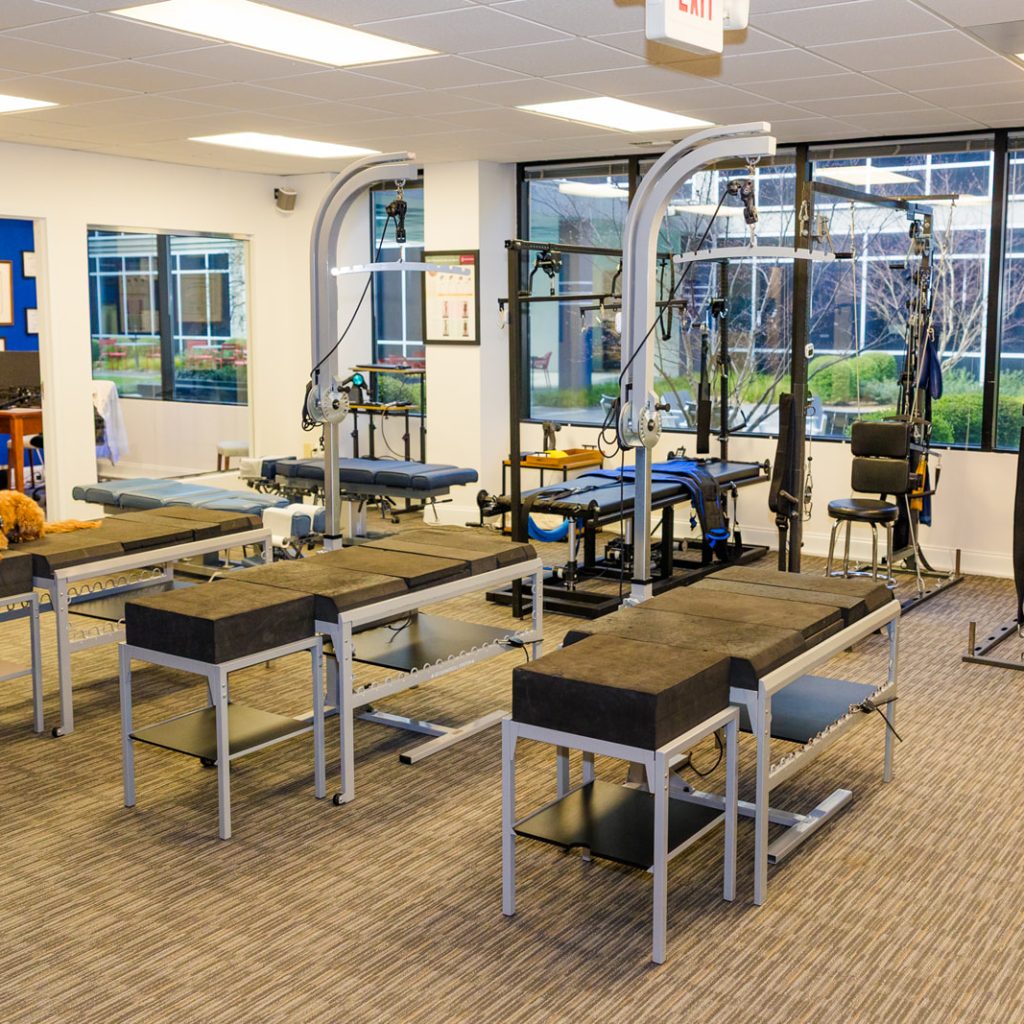
Mechanical traction equipment to include seated and laying down using dynamic and non-dynamic therapies

If you are living with lumbar spondylolisthesis and want to explore whether conservative mechanical care can help your specific alignment, a comprehensive evaluation is the best place to start. By utilizing advanced digital posture and spinal imaging—including stress films—we can thoroughly analyze your structural mechanics and provide an honest, clear assessment of what kind of correction is realistically achievable.

Strong Spine & Body serves patients in Sandy Springs, Dunwoody, Roswell, Marietta, and the greater North Atlanta area.

This article discusses research published in the European Spine Journal and synthesized on CBP Non-Profit:

Fedorchuk CA, Lightstone DF, Fedorchuk CG, Fernandez CJ, DeGeorge SM, Harrison DE. Improvement in physical and mental quality of life following reduction of lumbar spondylolisthesis using Chiropractic BioPhysics® corrective spinal rehabilitation: a case series of 117 patients with lumbar anterolisthesis(es). European Spine Journal. Published February 2, 2026.